

close
Choose Your Site
Global
Social Media

Views: 0 Author: Site Editor Publish Time: 2026-10-22 Origin: Site


Surface defects in the aluminum industry carry a massive financial burden. Even micro-scratches during the final packaging stage often result in entire coil rejections, severe material downgrades, or expensive customer claims. Aluminum features a low Mohs hardness, making it inherently vulnerable to abrasion. Standardized packaging processes frequently introduce friction through improper handling, inconsistent film tension, abrasive machine contact points, or trapped environmental debris. Mitigating this surface damage requires moving away from manual wrapping or repurposed heavy-duty equipment. Facilities must evaluate a purpose-built aluminum coil wrapping machine designed specifically for soft-metal handling. These systems offer precise tension control, automated material application, and advanced spatial awareness to protect delicate alloys. We will break down exactly how mechanical upgrades and operational shifts eliminate packaging-related scrap.
Material Compatibility is Non-Negotiable: Repurposing a steel coil wrapping machine for aluminum operations guarantees surface damage due to incompatible, unyielding contact rollers.
Tension Control Prevents Abrasions: Advanced Variable Frequency Drive (VFD) systems are required to maintain consistent film tension, preventing wrapping film breakage and the subsequent snap-back friction that scars soft alloys.
Automation Reduces Handling Touchpoints: Integrating an orbital coil wrapping machine minimizes crane and forklift interventions, which are the primary culprits for edge and surface gouging.
Smart Sensors Prevent Collisions: Modern equipment utilizes ultrasonic and photoelectric sensors to automatically detect coil dimensions, eliminating the risk of mechanical impact during the wrapping cycle.
Vendor Expertise Matters: Selecting a specialized coil wrapping machine manufacturer ensures access to custom-engineered contact surfaces (like polyurethane-coated rollers) tailored to specific aluminum tempers.
Success in aluminum packaging is measured by absolute perfection. Coils must reach the end user without a single surface blemish. Edges must remain completely intact and free from crimping. The moisture barrier requires total integrity to prevent oxidation during transit. Any deviation from these metrics results in material scrap. Aluminum mills operate on tight margins, meaning packaging cannot be an afterthought. The wrapping process must actively protect the metallurgical properties of the coil while securing it for harsh logistics networks. You cannot rely on manual labor to achieve this level of consistency. Human operators naturally apply uneven tension when hand-wrapping, and fatigue leads to sloppy edge protection placement.
Surface damage generally falls into two categories: friction and impact. Friction occurs constantly during poorly optimized wrapping cycles. Film drags across the outer layers when tension is uneven. Mismatched roller speeds create micro-abrasions along the coil's outer diameter. Trapped metal shavings under the stretch film grind directly into the soft alloy as the coil rotates. Impact damage happens differently but is equally destructive. Harsh loading onto the wrapping station causes deep dents. Abrupt machine stops shift the coil aggressively against its supports. Collisions with moving wrapping rings gouge the metal, destroying multiple layers of the coil instantly.
Damage Type | Root Cause | Visual Indicator | Prevention Strategy |
|---|---|---|---|
Friction Burns | Uneven film tension dragging across the surface. | Dull, scuffed bands along the outer diameter. | Implement VFD-controlled film carriages for smooth application. |
Roller Indentations | Using bare steel or knurled support rollers. | Repeating pressure marks or creases on the outer layers. | Upgrade to high-density polyurethane tapered rollers. |
Edge Gouging | Wrapping shuttle colliding with the coil during the cycle. | Torn edges and crushed inner diameter layers. | Integrate ultrasonic sensors for automated coil centering. |
Debris Grinding | Static electricity attracting metal shavings to the film. | Deep, irregular scratches trapped under the packaging. | Install anti-static bars and automated surface blowers. |
Facilities often attempt to cut corners by using a standard steel coil wrapping machine for aluminum production lines. This approach fails immediately. Steel equipment assumes high material hardness and massive weight. It utilizes bare, knurled steel rollers designed to grip heavy, rigid materials. These unyielding contact points crush delicate aluminum coils upon loading. Furthermore, the heavy-duty tension settings engineered for steel will instantly scar softer aluminum tempers. Aluminum requires a delicate touch, specialized grip materials, and finely tuned rotational speeds that steel-focused machinery simply cannot provide. The metallurgical differences demand entirely different mechanical handling profiles.
Knurled or bare steel rollers destroy aluminum surfaces on contact. You must replace them with high-density polyurethane or rubberized equivalents. These softer materials absorb minor shocks during the loading phase. They provide the necessary rotational grip without scratching the outer layers. Tapered support rollers distribute the coil weight evenly across a larger surface area. This specific engineering prevents localized pressure marks on the outer diameter. The durometer rating of the polyurethane usually falls between Shore A 70 and 85, which must be matched to the specific aluminum tempers processed in your facility. Harder alloys can tolerate slightly firmer rollers, while dead-soft O-tempers require maximum cushioning.
Variable Frequency Drives (VFDs) regulate the speeds of the wrapping ring and the film carriage. Dynamic tension adjustment is critical for soft metals. It prevents wrapping film breakage during high-speed cycles. When film snaps under excessive tension, the elastic recoil slaps the aluminum, causing severe friction burns. VFDs ensure the film stretches smoothly over the coil. The drives ramp up speed gradually and decelerate smoothly, ensuring the packaging material never drags abruptly across the delicate surface. Modern systems utilize closed-loop PID controllers that constantly monitor film tension and adjust the carriage speed in milliseconds to maintain a perfect, scratch-free application.
Modern equipment relies heavily on ultrasonic and laser sensors. These devices automatically detect the coil's outer and inner diameters before the cycle begins. This spatial awareness is mandatory for scratch prevention. It allows the machine to center the load perfectly within the wrapping ring. The shuttle never strikes the delicate aluminum edges because the PLC calculates the exact clearance required. Automation removes the guesswork from handling varying coil sizes, eliminating the human errors that typically lead to mechanical collisions. If a coil is loaded slightly off-center, the sensors detect the anomaly and adjust the ring position automatically before initiating the wrap.
An orbital coil wrapping machine passes protective film through the eye of the coil seamlessly. A synchronized shuttle handles this complex movement. It prevents edge crushing completely by maintaining a consistent distance from the metal. The automated process eliminates manual scraping entirely. Operators no longer drag heavy film rolls or VCI paper across the metal surface. The orbital mechanism ensures overlapping layers are applied with mathematical precision, creating a tight, uniform barrier without introducing mechanical friction. The shuttle track must be machined to exacting tolerances to prevent any vibration that could transfer to the film dispenser and cause uneven tension.
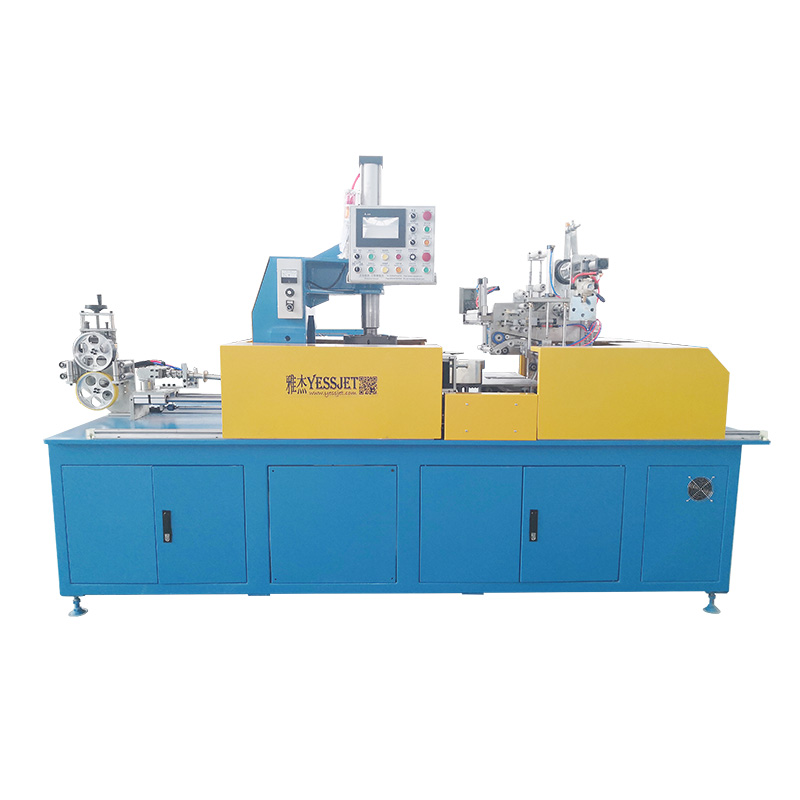
The consumables used in an aluminum coil packaging machine dictate the final surface quality. Linear Low-Density Polyethylene (LLDPE) stretch film requires specific properties. Gauge, stretch rate, and tackiness matter immensely. We typically recommend a 25 to 30-micron film with a 250% pre-stretch capability. The film must adhere only to itself. It should never rub aggressively against the aluminum. Integrating VCI (Volatile Corrosion Inhibitor) paper dispensers within the machine is equally vital. VCI paper neutralizes moisture and prevents chemical etching. The machine must dispense both layers simultaneously to avoid multiple handling phases. Layering VCI directly against the metal with a tight LLDPE overwrap creates an impermeable, scratch-resistant cocoon.
Manual edge protector application causes unnecessary friction. Operators often slide rigid plastic or cardboard pieces against the coil to position them. Automated features solve this problem entirely. Advanced machines apply inner and outer diameter edge protectors mechanically before the primary wrapping cycle begins. Robotic arms or synchronized dispensers place the protectors gently against the corners. This eliminates human-induced surface scratches and ensures the stretch film does not cut into the soft aluminum edges during the tensioning phase. The edge protectors also provide a smooth surface for the film to glide over, further reducing the risk of friction burns on the most vulnerable parts of the coil.
Airborne dust and stray metal shavings ruin aluminum coils. Static electricity generated during the wrapping cycle attracts these particles directly to the film and the metal. Anti-static film delivery systems neutralize this charge, preventing debris attraction. Clean-zone blowers clear the coil surface immediately before film application. Automated wiping mechanisms can also be integrated to remove residual particles. These environmental controls keep the wrapping zone sterile, ensuring no abrasive materials are trapped tightly against the aluminum surface. A single metal shaving caught under high-tension stretch film will carve a continuous scratch around the entire circumference of the coil during transport.
Transferring coils to the wrapping station requires extreme care. Rough handling upstream negates the benefits of advanced packaging machinery. Use C-hooks fitted with thick polyurethane pads. Automated V-track conveyors offer smooth, vibration-free transitions from the staging area to the wrapper. The machine's blocking and lifting mechanisms must gently cradle the coil from below. Clamping forces applied to the sides will distort the metal and cause internal layer shifting, which leads to deep abrasion. Forklifts should be restricted from direct contact with the bare coil whenever possible, as steel forks are the leading cause of severe impact gouges.
The transition from the slitting line to packaging introduces significant risks. Integrating automated, soft-touch PET strapping systems helps secure the coil early. Apply these straps prior to wrapping. This prevents the coil from telescoping or shifting during transport to the packaging station. Internal friction scratches disappear when coils remain tightly bound. The strapping tension must be carefully calibrated to hold the layers securely without biting into the outer edges of the aluminum. Steel strapping should be avoided entirely for soft alloys, as it will inevitably cut into the metal regardless of how carefully it is applied.
Different aluminum tempers require highly specific machine parameters. Dead soft O-tempers need significantly lower tension than harder H-tempers. You must establish strict operational procedures for setting up the machine before running a new batch.
Identify the specific alloy temper and input the corresponding data profile into the main PLC interface.
Adjust the VFD tension parameters based on the material's documented yield strength to prevent edge crushing.
Set the orbital ring speed to match the required film overlap percentage, ensuring consistent barrier thickness.
Verify the alignment of the automated edge protector dispensers to match the exact outer diameter of the current coil.
Execute a brief dry run without dispensing film to confirm that all ultrasonic sensors have established proper clearance margins.
Poor maintenance ruins even the best coil wrapping equipment. Worn roller bearings cause uneven rotation and jerky movements. This leads directly to surface dragging and severe scratching. A strict maintenance schedule is your first line of defense against mechanical abrasions. Implement the following checks to keep the system running flawlessly.
Inspect all polyurethane contact rollers daily for embedded metal shards or debris.
Clean the lenses of the ultrasonic and laser sensors with microfiber cloths to maintain accurate spatial awareness.
Verify that all VFD communication cables are securely connected to prevent sudden tension spikes.
Lubricate the orbital ring gear track weekly to ensure smooth, vibration-free shuttle movement.
Test the emergency stop mechanisms and tension release valves to guarantee immediate disengagement during a fault.
Measure the durometer of the support rollers quarterly to ensure the polyurethane has not hardened from environmental exposure.
Selecting a specialized coil wrapping machine manufacturer requires careful evaluation of their engineering depth. Do they offer bespoke roller designs tailored to your specific coil weights? Can they integrate their PLC with your existing ERP systems for automated recipe selection? Customization is non-negotiable for soft metal handling. Off-the-shelf solutions will inevitably cause damage. The vendor must demonstrate a deep understanding of aluminum metallurgy and the specific challenges of wrapping low-hardness alloys. Ask for case studies showing how they engineered solutions for dead-soft tempers or highly sensitive aerospace-grade aluminum.
Modern manufacturers offer advanced PLC-based data logging. Track tension metrics, cycle times, ring speeds, and error codes for every single wrapped coil. This provides a verifiable, digital audit trail. If a customer claims surface damage occurred during transit or packaging, you have the exact machine data to prove the coil was wrapped flawlessly. This Industry 4.0 integration transforms the wrapping machine from a simple packaging tool into a critical quality assurance checkpoint. The ability to export this data directly to your quality management system ensures complete traceability for every coil that leaves your facility.
Mandate a rigorous Factory Acceptance Test (FAT) using your own aluminum coils. Never rely on tests conducted with steel or scrap metal. Visual inspection for micro-scratches under harsh lighting is critical. Verify the tension consistency logs directly from the PLC. Confirm that cycle times match your production requirements without compromising handling safety. Never accept delivery of a machine without a successful, material-specific FAT that proves zero surface defects. The testing protocol should include running the machine at maximum speed, simulating emergency stops, and verifying that the automated edge protectors deploy perfectly every time.
Preventing scratches on aluminum coils requires engineered mechanical precision and automated spatial awareness. Relying solely on operator care or repurposed heavy machinery will inevitably lead to surface defects and rejected shipments. Protecting delicate alloys demands specialized equipment featuring VFD tension control, 100% non-metallic contact points, automated edge protection, and smart collision-avoidance sensors. Take immediate action to secure your packaging line and eliminate material downgrades.
Audit your current packaging-related scrap rates to identify exact friction sources and handling bottlenecks.
Document precise coil dimensions, weights, and alloy tempers to provide vendors with accurate engineering baselines.
Initiate technical consultations with shortlisted manufacturers to request custom Factory Acceptance Test (FAT) proposals.
Upgrade upstream handling equipment by installing polyurethane padding on all C-hooks and V-track conveyors immediately.
A: The primary differences lie in roller materials, weight distribution, and tension sensitivity. Steel machines use hardened steel rollers that easily scratch aluminum. Aluminum wrappers utilize polyurethane-coated rollers to absorb impact. They also feature highly sensitive VFD tension controls to prevent crushing soft alloys.
A: It uses a synchronized ring and shuttle system that passes the film evenly through the eye of the coil. This prevents the film from dragging across the metal. Automated edge protector dispensers also apply barriers before wrapping, eliminating manual handling risks.
A: Breakage usually stems from improper VFD tension settings, sharp coil edges lacking protectors, or inconsistent carriage speeds. When the machine pulls the film faster than the stretch rate allows, it snaps, causing elastic recoil that can scratch the aluminum.
A: Yes. Modern machines feature dual-carriage capabilities. They dispense and layer VCI paper and LLDPE stretch film in a single synchronized pass. This minimizes handling time and ensures the corrosion inhibitor is tightly sealed against the metal.
A: Ultrasonic and laser sensors detect the exact outer and inner diameters of the coil. The PLC uses this data to center the load perfectly. This prevents the moving wrapping ring and shuttle from colliding with the delicate aluminum surface.
A: Prioritize vendors with proven custom engineering capabilities for soft metals. Look for rigorous FAT protocols using your actual materials, Industry 4.0 data logging for quality assurance, and robust post-installation technical support.
A: Polyurethane is softer than steel but highly durable. It absorbs minor loading impacts, distributes the coil's weight evenly to prevent pressure marks, and provides necessary rotational grip without abrasive metal-on-metal contact.