

close
Choose Your Site
Global
Social Media

Views: 0 Author: Site Editor Publish Time: 2026-07-03 Origin: Site


Global infrastructure projects face stricter fire safety mandates than ever before. Regulators now demand materials that actively protect human life during emergencies. This massive shift forces wire and cable manufacturers to adopt Low Smoke Zero Halogen (LSZH) materials. However, running an LSZH cable extrusion line introduces significant production hurdles. Unlike traditional plastics, these highly filled compounds are extremely viscous. They are acutely shear-sensitive. Attempting to maintain high line speeds often degrades the material. It ruins the final surface finish. To succeed, operators need complete control over complex thermal and mechanical variables. We will break down the precise mechanics of halogen-free processing. We will highlight essential equipment upgrades. Read on to learn how you can minimize scrap rates. Discover strategies to guarantee strict regulatory compliance consistently.
Process Complexity: LSZH cable extrusion requires specialized temperature and shear control to prevent pre-curing and material degradation.
Equipment Upgrades are Often Mandatory: Standard PVC/PE lines typically fail at high-speed LSZH extrusion without dedicated screw designs and precise conductor preheating.
Defect Mitigation: Controlling crosshead pressure and managing cooling gradients are the two most critical factors in preventing surface roughness and porosity.
Vendor Sourcing: Partnering with a specialized cable extruder manufacturer requires rigorous validation of their equipment's compounding efficiency and real-world throughput limits.
The chemistry behind LSZH formulations sets them apart from standard polymers completely. They rely heavily on metal hydroxides like aluminum trihydrate (ATH) or magnesium hydroxide (MDH). These specialized fillers act as robust flame retardants. When exposed to intense heat, they undergo an endothermic reaction. They release water vapor to suppress active flames. This chemical behavior introduces massive processing challenges. You cannot treat them like standard polyvinyl chloride (PVC).
Halogen-free compounds feature a notoriously narrow processing window. Standard polymers tolerate wide temperature swings easily. Halogen-free alternatives do not forgive thermal errors. Exceeding specific thermal thresholds triggers immediate problems. Temperatures around 170°C to 180°C often cause premature decomposition for ATH-based compounds. MDH offers slightly higher thermal limits. However, both will activate inside the extruder barrel if mishandled. This early activation ruins the compound entirely. Operators must maintain strict thermal profiles across every heating zone.
High filler ratios create a remarkably stiff melt. ATH or MDH particles increase the compound's overall viscosity dramatically. Standard screws generate excessive mechanical friction during normal extrusion. This friction leads to dangerous internal heat build-up. Polymer experts call this phenomenon shear heating. The stiff melt strongly resists forward flow. It absorbs mechanical energy and converts it into rapid thermal spikes. This uncontrolled heat causes the polymer to burn. It triggers premature cross-linking. The entire extrusion process halts abruptly.
Best Practices for Material Handling:
Store compounds in climate-controlled environments.
Dry materials thoroughly before feeding them into the hopper.
Monitor ambient humidity levels inside the production facility.
Rotate stock strictly to prevent compound degradation over time.
Let us compare the distinct differences in processing behavior below.
Processing Variable | Traditional PVC/PE | LSZH Compounds |
|---|---|---|
Viscosity | Low to Medium | Extremely High |
Shear Sensitivity | Highly Tolerant | Acutely Sensitive |
Processing Window | Broad (Flexible) | Very Narrow (Rigid) |
Friction Response | Stable Melt Flow | Rapid Shear Heating |
Construction Products Regulation (CPR) standards dictate strict fire performance rules globally. The CPR B1 classification requires exceptional flame resistance. It demands minimal smoke output and zero toxic halogen gas emissions. North American markets follow stringent UL wire standards similarly. These rigid frameworks ensure maximum safety in enclosed spaces like hospitals. Infrastructure projects universally demand full compliance. Manufacturers must meet these rigorous benchmarks.
Fire performance relies on more than just raw material chemistry. Extrusion consistency heavily dictates the final safety rating. Poor material dispersion creates fatal weak points in the wire. Micro-voids inside the insulation reduce structural integrity significantly. Uneven wall thicknesses lead to rapid failure during standardized burn tests. The physical structure of the extruded wire must remain flawless. Even minor processing errors trigger catastrophic compliance failures.
Maintaining tight tolerances requires robust in-line measurement protocols. You cannot rely on manual post-production checks. Implement multi-axis laser diameter gauges immediately after the crosshead. Add continuous eccentricity monitors to track wall thickness continuously. These advanced tools provide immediate feedback to the line operator. They prevent out-of-spec wire from reaching the final take-up reel. Strict adherence to these protocols guarantees consistent UL and CPR compliance.
Common Mistakes in Compliance Management:
Ignoring minor eccentricity fluctuations during high-speed runs.
Failing to calibrate laser gauges at the start of shifts.
Using outdated testing protocols incompatible with CPR B1 guidelines.
Overlooking microscopic surface voids until final burn testing.
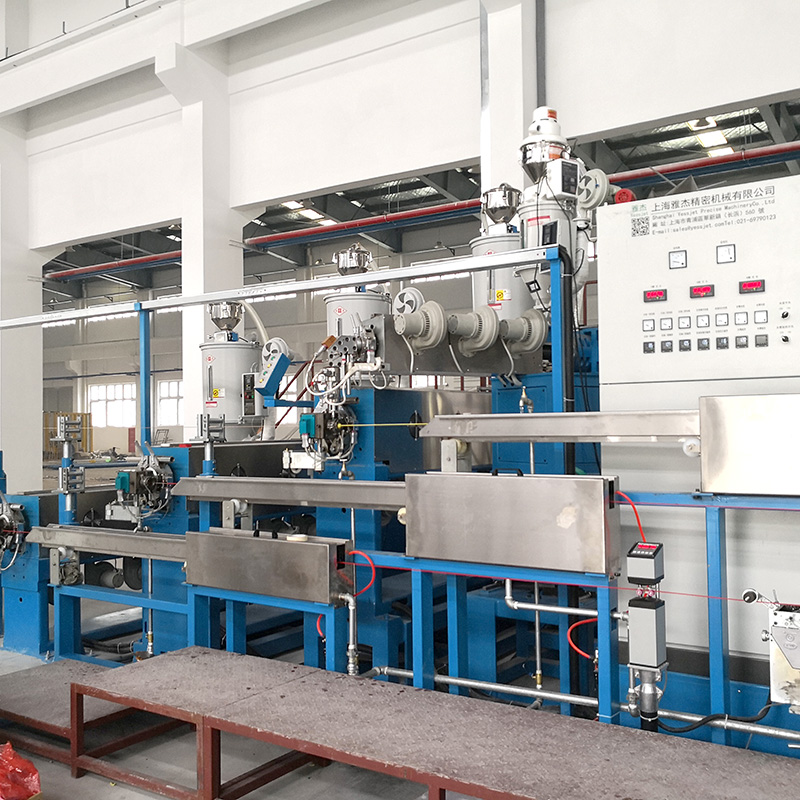
Standard PVC screws fail completely when processing halogen-free compounds. You need low-compression, high-mixing barrier screws. The primary goal is achieving a perfectly homogeneous melt. You must rely on thermal conduction rather than harsh mechanical shear. Deep flight depths help reduce harmful friction. They gently fold the highly viscous material forward. This specialized geometry prevents localized burning. It prevents the flame retardant from degrading prematurely.
Processing sensitive compounds requires optimal core preparation. A LSZH High-Prec Cable Extruder w/Preheater is absolutely non-negotiable. Bare copper or aluminum cores remain cold during initial pay-off. The hot polymer melt strikes this cold wire suddenly. It shrinks violently upon contact. This rapid cooling causes massive internal stress. Operators will observe poor adhesion and severe surface cracking. Preheating the conductor eliminates this dangerous thermal shock entirely. It ensures a flawless bond between metal and plastic.
Viscous materials demand highly streamlined extrusion heads. Traditional high-pressure setups create dangerous dead spots inside the tooling. Stagnant polymer pools inside these sharp corners. It degrades rapidly and contaminates the primary material flow. You must use low-pressure, semi-tube, or tube-on tooling designs. These configurations facilitate smooth, uninterrupted material pathways. They keep the stiff melt moving efficiently through the die.
Halogen-free insulation requires very careful and deliberate cooling. Shocking the hot wire in ice-cold water causes catastrophic failure. The surface hardens instantly while the inner layer remains entirely molten. This creates trapped stresses and microscopic surface voids. You must use a stepped water cooling trough. Implement gradual temperature gradients across multiple cooling zones. Start with warm water and slowly transition to cold. This gentle cooling process preserves structural integrity perfectly.
Process engineers must adopt a strict diagnostic mindset. Halogen-free extrusion requires constant vigilance. Identifying defects early saves massive amounts of raw material. We developed a comprehensive diagnostic framework below. Operators can use it to resolve production issues systematically. Do not guess when adjusting machine parameters. Follow evidence-based troubleshooting steps.
Symptom | Primary Root Cause | Immediate Fix / Action Step |
|---|---|---|
Surface Roughness ("Sharkskin") | Melt fracture due to high shear stress at the die exit. Incorrect melt temperature. | Adjust tooling draw-down ratio. Optimize die-zone heating profiles carefully. |
Porosity / Bubbles in Insulation | Moisture trapped in raw compound. Premature decomposition of flame retardant. | Verify hopper dryer operation. Lower screw RPM and barrel temperatures gently. |
Poor Adhesion / Eccentricity | Cold conductor wire entering crosshead. Unstable wire tension during pay-off. | Calibrate the wire preheater. Check pay-off tension and verify tooling alignment. |
Burn Marks / Discoloration | Material stagnation in crosshead. Excessive shear heat from screw friction. | Clean crosshead thoroughly. Switch to a low-compression barrier screw design. |
Operators must document every parameter change meticulously. Adjusting temperature zones too quickly causes severe instability. Make small, incremental changes to the barrel heaters. Allow the system to stabilize before evaluating the surface finish again. Proper training ensures operators recognize melt fractures immediately. Catching porosity early prevents entire reels from failing UL burn tests.
Purchasing new equipment requires a modern analytical mindset. Shift away from purely features-based evaluations. Focus heavily on outcomes-based metrics instead. Ask vendors for guaranteed kilogram-per-hour output limits. Ensure they promise zero compound degradation at maximum line speeds. A standard Cable Extruder Machine rarely guarantees these specific results. You need specialized machinery built for high-viscosity applications.
You face a tough decision regarding capital expenditure. Should you upgrade your existing line? Retrofitting involves changing the screw. It requires swapping the crosshead and adding a preheater. This approach limits initial capital outlay. However, legacy drives might lack the torque required for highly viscous melts. Upgrading an old frame limits your performance ceiling. Investing in a fully automatic greenfield line ensures total system compatibility. It provides higher long-term manufacturing efficiency.
Choosing the right cable extruder manufacturer demands rigorous validation. You cannot trust generic marketing brochures. Ask hard technical questions. Demand physical proof of machine capabilities. Use the following validation checklist during your procurement process.
Do they offer dedicated LSZH screw profiles, or merely modified PVC screws?
Can they facilitate a physical line trial using your specific compound formula?
What is the integration level of their PLC/HMI for recipe management?
Do they provide continuous thermal trending data on their control screens?
How comprehensive is their post-installation support for high-wear barrel components?
Can they demonstrate successful installations passing CPR B1 compliance tests?
Always request reference contacts from previous installations. Speaking with other plant managers reveals true machine reliability. Do not skip this critical validation step.
Successful LSZH cable extrusion demands precise thermal and shear management. You must control every mechanical variable meticulously. Heavy flame-retardant fillers create unique processing challenges. Standard PVC machinery cannot handle these highly viscous materials effectively. Operators must maintain strict temperature profiles to prevent premature compound degradation. Proper screw geometry ensures a homogeneous melt without dangerous shear heating.
Attempting to run sensitive halogen-free compounds on legacy equipment is dangerous. It often costs significantly more in wasted scrap material. Failed compliance tests destroy profit margins quickly. The necessary capital expenditure for dedicated machinery pays for itself rapidly. Modern equipment guarantees consistent surface finishes and tight dimensional tolerances.
Take action today to secure your production future. Audit your current extrusion capabilities immediately. Identify your primary thermal and mechanical bottlenecks. Request a technical consultation or a full line trial. Partner with an established equipment vendor to guarantee your future compliance. Upgrading your infrastructure ensures you meet global fire safety mandates confidently.
A: It is technically possible at drastically reduced line speeds. However, experts highly discourage this practice. Standard screws generate excessive mechanical friction. This high shear quickly burns the sensitive halogen-free compound. You will experience massive scrap rates and unacceptable surface quality. Investing in a dedicated screw profile remains the only reliable solution.
A: Halogen-free compounds completely lack the natural flexibility of traditional PVC. Extruding this stiff melt onto a cold copper or aluminum wire triggers severe thermal shock. The sudden temperature drop forces the polymer to shrink violently. This rapid contraction causes poor adhesion, massive internal stress, and highly brittle insulation. A preheater eliminates this risk entirely.
A: Raw material quality directly dictates your maximum line speed. Inefficient compounding leaves flame retardants unevenly dispersed. The extruder must work much harder to melt this inconsistent mixture. You cannot simply increase screw RPM to compensate. Higher speeds generate excess shear heat. The material will overheat and degrade long before it reaches the crosshead.