

close
Choose Your Site
Global
Social Media

Views: 0 Author: Site Editor Publish Time: 2026-10-26 Origin: Site


Inadequate coil packaging destroys profit margins across the metal processing industry. Corrosion, telescoping, edge damage, and rejected shipments plague service centers relying on improper wrapping methods. Coil dimensions directly dictate machine architecture. Outside diameter, inside diameter, width, gauge, and weight establish the absolute mechanical limits of any packaging line. Deploying a generic packaging solution across highly variable coil inventories guarantees production bottlenecks. It causes excessive material waste and risks catastrophic machine failure during operation. You need a structured evaluation framework to protect high-value inventory. Match specific coil parameters to the correct wrapping technology. Narrow slit coils destined for automotive parts require vastly different handling mechanisms than 35-ton master coils used in heavy construction. This guide provides actionable engineering steps to select the precise equipment and automation level required for your facility.
Orientation Dictates Architecture: The choice between vertical and horizontal (orbital) wrappers depends entirely on how coils are stored, handled (eye-to-sky vs. eye-to-wall), and transported.
Dimensional Extremes Require Customization: Standard machines fail at the margins; extreme widths (e.g., up to 2500mm) or highly variable ID/OD ratios necessitate specialized shuttle and ring designs.
Tension Control is Non-Negotiable: Automated film tensioning is critical to prevent edge crushing on thin-gauge materials while maintaining a moisture-tight seal.
Material Versatility Matters: Handling different metals and coatings (galvanized, stainless, aluminum) requires specific machine adaptations to prevent surface damage and accommodate varying structural integrities.
The maximum and minimum Outside Diameter (OD) directly dictate the required ring size of the wrapper. If the ring is too small, large coils simply will not fit through the wrapping zone. If the ring is excessively large for a small coil, the film carriage travels too far during each rotation. This excessive travel distance reduces wrapping speed and compromises overlap consistency. You must audit your historical production data to establish accurate OD boundaries before specifying equipment.
The Inside Diameter (ID) presents strict mechanical constraints. The machine's film shuttle must pass cleanly through the ID without colliding with the inner wraps of the coil. Tight IDs require low-profile film carriages. If the ID varies wildly across your inventory, the shuttle design must accommodate the smallest ID while holding enough film to wrap the largest OD without constant reloading. A standard 508mm ID accommodates most standard shuttles, but slit coils with 300mm IDs require highly specialized, compact carriage designs.
Coil width variations demand different structural approaches. Narrow slit coils, sometimes as thin as 20mm, require tight, highly controlled film overlap to prevent the packaging from slipping off the edges. These narrow coils are prone to tipping and require side guide rollers during the wrapping cycle. Wide master coils, reaching up to 2500mm, require heavy-duty film carriages and extended wrapping cycles. The machine must maintain consistent film delivery across massive surface areas without tearing or losing tension.
Coil thickness, or gauge, impacts structural integrity during the wrapping process. Thin-gauge materials deform easily. They act like razor blades against the packaging material and are highly susceptible to edge crushing under improper tension. Thick-gauge materials possess immense internal spring force. They require robust containment to prevent sudden uncoiling during the wrapping cycle. Your equipment must adapt to these varying structural behaviors through adjustable tension settings and specialized edge protection applicators.
Dimension Parameter | Operational Constraint | Machine Design Impact |
|---|---|---|
Maximum Outside Diameter (OD) | Physical clearance through the machine | Dictates the main ring diameter and frame height. |
Minimum Inside Diameter (ID) | Shuttle passage clearance | Requires low-profile film carriages for tight IDs. |
Maximum Coil Width | Surface area coverage | Requires extended wrapping cycles and heavy-duty carriages. |
Material Gauge (Thickness) | Edge sensitivity and spring force | Dictates tension control sensitivity and containment strength. |
Structural requirements scale exponentially with coil weight. Handling light slit coils weighing under 1,000 lbs requires precision and speed. Handling heavy master coils scaling up to 35 tons requires massive structural engineering. Standard steel frames will flex, warp, and eventually fail under continuous 35-ton dynamic loads. When a heavy coil transfers from a crane or forklift onto the machine, it generates a massive shock load that the frame must absorb without transferring the stress to sensitive drive components.
Roller beds must feature heavy-duty bearings and reinforced axles to support extreme weights. Turning stations require high-torque gear motors and heavy steel plating. Continuous heavy loads cause metal fatigue in under-specced equipment, leading to catastrophic failure and extended downtime. You must verify the maximum dynamic load rating of every conveyor, roller, and lifting mechanism in the packaging line.
Calculate the maximum static weight of your heaviest master coil.
Apply a 1.5x multiplier to account for dynamic shock loads during loading.
Specify double-row spherical roller bearings for all primary drive stations.
Require reinforced steel gussets on all main frame weldments.
Verify Variable Frequency Drive (VFD) motor torque curves for smooth starting and stopping of heavy loads.
Bare carbon steel withstands aggressive handling. Heavy-duty knurled steel rollers provide excellent traction for rotating carbon steel coils. However, softer metals and highly finished surfaces require extreme care. Using bare steel rollers on sensitive materials causes immediate surface scoring, spalling, and rejected shipments.
An aluminum coil wrapping machine utilizes specialized polyurethane roller coatings. These coatings provide necessary traction without scratching the soft aluminum surface. Galvanized, color-coated, and stainless steel coils also require gentler handling mechanisms. The durometer (hardness) of the polyurethane must match the specific sensitivity of the metal being processed. Typically, an 85 to 90 Shore A hardness provides the right balance of grip and surface protection.
The end-use of the coil dictates the required level of surface protection. Exposed architectural profiles demand flawless surfaces. Any scratch ruins the product. Internal structural components tolerate minor surface variations. You must align the machine's handling components with the strict quality control requirements of your end customers, ensuring no mechanical part of the wrapper damages the outer wraps of the coil.
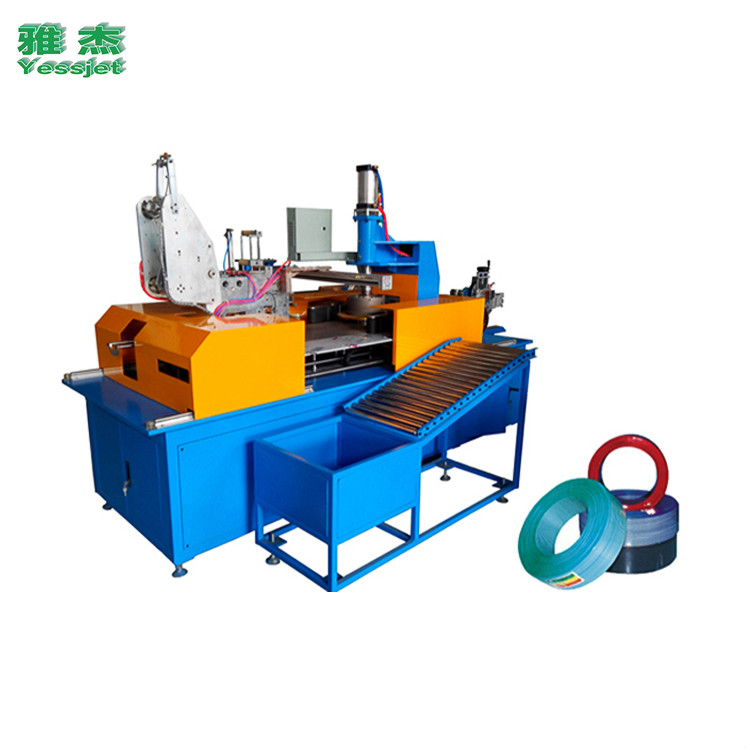
Vertical configurations suit specific operational workflows. They are ideal for eye-to-sky coil orientations. If your facility stores coils flat on pallets, a vertical machine eliminates the need to upend them before packaging. This orientation perfectly matches the handling requirements for wire coils, copper tubing, and narrow slit coils that are unstable when placed on their edges.
A vertical steel coil wrapper integrates seamlessly with overhead handling equipment. C-hooks and jib cranes load coils directly onto the wrapping station. This setup supports high-density vertical storage systems. Operators can move coils from the slitter, wrap them, and stack them without changing the coil's spatial orientation, significantly reducing handling time and the risk of dropping the load.
Footprint advantages make vertical machines attractive for crowded facilities. They occupy significantly less floor space than horizontal lines. Throughput expectations align well with localized slitting operations where coils are processed and packaged in discrete batches rather than continuous, high-speed automated lines.
Horizontal configurations dominate heavy industrial processing. They are ideal for eye-to-wall orientations. Large, heavy master coils almost exclusively travel and store in the eye-to-wall position. Upending a 30-ton coil is dangerous, requires massive specialized equipment, and slows down production. Wrapping it in its natural resting position is mandatory for safety and efficiency in high-volume service centers.
An orbital coil wrapper integrates directly with continuous production equipment. It connects seamlessly to slitting lines and decoilers via heavy-duty V-track conveyors. This configuration works efficiently with automated guided vehicles (AGVs) transporting heavy loads across the plant floor, allowing for a fully automated material flow from the slitter to the shipping bay.
Orbital rings provide distinct mechanical advantages. They enable high-speed, continuous wrapping of large-diameter coils. The ring rotates around the stationary or slowly turning coil, applying film with precise overlap. This method ensures maximum containment force for massive steel rolls, preventing telescoping during transit.
Feature | Vertical Wrapper | Orbital (Horizontal) Wrapper |
|---|---|---|
Coil Orientation | Eye-to-Sky (Vertical) | Eye-to-Wall (Horizontal) |
Typical Load Weight | Under 5,000 lbs | Up to 35+ Tons |
Handling Integration | Jib cranes, C-hooks, Pallet jacks | V-track conveyors, AGVs, Heavy forklifts |
Facility Footprint | Compact, localized footprint | Large, linear footprint |
Primary Application | Narrow slit coils, copper wire, tubing | Steel mills, heavy service centers |
Applying film to a curved metallic surface involves strict physics. The film must stretch enough to activate its memory, pulling tightly against the steel. Inconsistent tension ruins packaging integrity. Loose wraps allow moisture ingress, leading directly to flash rust and rejected material. Overtight wraps concentrate crushing forces on the coil edges, causing severe deformation on thin-gauge materials.
Mastering coil wrapping film tension requires automated dynamic controllers. Mechanical friction brakes rely on operator adjustment and wear out quickly, leading to inconsistent application. Advanced systems use electromagnetic brakes or motorized pre-stretch carriages. These systems adjust tension in real-time based on the coil's diameter, the speed of the ring, and the specific flexibility of the packaging material.
Thin-gauge steel requires highly sensitive tension feedback loops. The machine must detect the exact moment the film applies pressure to the edge and regulate the feed rate to prevent bending. Thick master coils require high-tension containment to prevent the outer wraps from springing loose during transit. Load cells integrated into the film carriage provide the necessary data to the PLC to maintain exact tension parameters throughout the entire wrapping cycle.
Machines must handle various industrial packaging materials without jamming or tearing. VCI (Volatile Corrosion Inhibitor) stretch film, woven paper, and heavy-duty PE film are standard requirements in modern metal packaging. Each material possesses different stretch characteristics, tear resistance, and friction coefficients. The film carriage must accommodate these varying physical properties through adjustable roller gaps and tension settings.
Export-grade packaging requires multi-layering. Single-layer stretch film rarely survives harsh maritime shipping environments where salt air and rough handling are standard. Dual-roll dispensers allow the machine to apply rust-prevention layers (like VCI paper) and physical protection layers (like heavy PE film) simultaneously. This simultaneous application cuts packaging time in half compared to running the coil through the machine twice.
Verify the carriage can handle 25-micron to 50-micron film thicknesses.
Ensure the dispenser accommodates varying core diameters of packaging rolls.
Test the cutting mechanism on woven paper, as it dulls standard blades rapidly.
Confirm the machine can apply edge protectors automatically before the final film layer.
Match packaging materials to specific coatings carefully. Ensure VCI chemicals do not react negatively with galvanized or color-coated finishes. Certain VCI compounds cause permanent staining on sensitive aluminum surfaces. Your machine must seamlessly switch between different film types based on the daily production schedule without requiring extensive mechanical changeovers.
Automation levels directly impact labor requirements and throughput. Semi-automatic systems require operator assistance for loading the coil, attaching the film to the steel, and cutting the tail at the end of the cycle. These systems work well for low-volume operations but create severe bottlenecks in high-speed service centers where coils come off the slitter every few minutes.
Fully automated systems eliminate manual intervention. Advanced PLC controls manage the entire cycle. Automatic film clamping, pneumatic cutting, and taping mechanisms drastically increase throughput. The operator simply monitors the HMI screen while the machine executes precise recipe-driven wrapping sequences based on barcode scans or ERP system inputs.
A reliable steel coil wrapping machine scales with your production demands. Investing in fully automated features upfront prevents costly retrofits when facility output increases. Automated systems also guarantee consistent packaging quality, removing human error from the tension and overlap equations. Every coil receives the exact same amount of film, applied at the exact same tension, ensuring uniform protection across the entire inventory.
Installation realities dictate machine configuration. Pit-mounted configurations allow floor-level loading. Operators can move coils directly into the machine using standard pallet jacks or low-clearance forklifts. This setup requires civil engineering work to excavate and pour a reinforced concrete pit, complete with proper drainage and conduit routing. Floor-mounted setups avoid excavation but require robust steel ramps or heavy-duty overhead cranes for loading, which alters the material flow path.
Conveyor integration ensures smooth transitions from processing to packaging. V-track conveyors cradle heavy master coils securely, preventing them from rolling off the line. Flat roller conveyors handle palletized slit coils. The handshake between the slitting line conveyor and the packaging line conveyor must be flawless. Misaligned sensors or mismatched conveyor speeds cause coil damage during transfer and trigger system faults.
Mandatory safety protocols protect operators from moving machinery and heavy loads. Install Category 4 safety light curtains around the wrapping zone. Erect physical steel fencing to isolate the orbital ring path. Integrate emergency stop circuits across all operator stations and tie them directly into the main line PLC. Safety interlocks must immediately halt all motion, engage mechanical brakes, and dump pneumatic pressure if an operator breaches the active wrapping area.
Off-the-shelf equipment often fails when dealing with edge-case dimensions. Extreme weights, highly variable ID/OD ratios, and unique facility layouts demand specialized engineering. Standard machines force you to adapt your workflow to the equipment, which introduces inefficiencies. Custom-engineered solutions adapt the equipment to your optimal workflow, maximizing throughput and safety.
An industrial coil wrapping machine represents a critical production node. If it goes down, the entire slitting line stops, backing up production across the facility. Partnering with a reliable custom coil wrapping machine manufacturer mitigates installation risks and ensures long-term operational stability.
Verify the manufacturer's in-house mechanical and electrical engineering capabilities.
Demand strict Factory Acceptance Testing (FAT) protocols using your actual coil samples before shipping.
Ensure local technical support is available for rapid troubleshooting and PLC programming updates.
Confirm spare parts availability for critical wear components like friction wheels, drive belts, and cutting blades.
Review past installation case studies involving similar coil dimensions, weights, and facility constraints.
Audit your facility's minimum and maximum coil dimensions, including OD, ID, width, and exact weight parameters.
Calculate peak daily throughput to establish the exact automation level your production line requires to prevent bottlenecks.
Assess your floor layout and material handling equipment to determine if a pit-mounted or floor-mounted configuration fits your workflow.
Contact specialized equipment manufacturers to schedule a comprehensive site evaluation and request a custom engineering proposal.
A: Standard machines typically handle up to 5 tons, but heavy-duty orbital wrappers engineered for steel mills process master coils weighing up to 35 tons. These extreme weights require reinforced structural frames, specialized V-track conveyors, and high-torque drive systems to rotate the load safely without causing metal fatigue in the machine base.
A: Extreme widths up to 2500mm require extended film carriages and specialized ring structures to maintain consistent overlap. Varying thicknesses dictate tension control requirements. Thin-gauge steel needs highly sensitive, automated tensioning to prevent edge crushing, while thick-gauge material requires robust containment to prevent uncoiling during the wrapping cycle.
A: An orbital wrapper processes coils in an eye-to-wall (horizontal) orientation, making it ideal for heavy master coils and continuous line integration. A vertical wrapper processes coils in an eye-to-sky orientation, which suits narrow slit coils, wire products, and facilities utilizing overhead crane loading or palletized storage.
A: You control tension using automated dynamic controllers, such as electromagnetic brakes or motorized pre-stretch carriages. These systems adjust the film feed rate in real-time based on the coil diameter and material flexibility, ensuring tight moisture seals without applying crushing force to the sensitive edges of the steel.
A: Yes, provided the machine is equipped with specialized handling components. Processing softer metals like aluminum requires polyurethane-coated rollers with a specific durometer to prevent surface scoring. The machine must also feature adjustable tension settings to accommodate the differing structural integrities of steel and aluminum.
A: Coated materials require gentler handling to prevent surface defects. The machine must use non-marring contact surfaces on all rollers and guides. Additionally, the packaging material dispensers must accommodate specific VCI films that do not chemically react with the galvanized or color-coated finishes, preventing permanent staining.
A: You should engage a custom manufacturer when your coil dimensions exceed standard parameters, when handling weights surpass 10 tons, or when your facility layout requires unique conveyor integration. Custom engineering is also necessary when processing highly sensitive materials requiring specialized tension and roller configurations.