

close
Choose Your Site
Global
Social Media

Views: 0 Author: Site Editor Publish Time: 2026-06-09 Origin: Site


Modern manufacturing demands absolute perfection across every single process step. High-speed cable extrusion and winding lines operate under extremely tight margins. Minor tension fluctuations quickly compound into costly scrap and unusable product. They cause severe material degradation and lead to failed compliance testing. Manufacturers cannot afford these hidden inefficiencies. Uncontrolled tension drives structural core deformation in metal wires. It also creates micro-bending signal attenuation in delicate fiber optics. Such defects ruin entire production batches silently. Upgrading your tension regulation infrastructure changes everything for your plant. It shifts production from reactive quality control to predictable, high-yield manufacturing. You gain absolute control over spooling processes. Operators stop guessing and start relying on accurate operational data. Precision tension protects structural integrity at maximum line speeds. We will explore how modern systems stabilize your daily production. You will discover the hidden costs of unstable manufacturing lines. We outline methods to evaluate closed-loop versus open-loop configurations. You will learn to implement robust buffering strategies effectively.
Consistent tension minimizes material elongation, protecting the structural and signal integrity of both fiber optic and metal cables.
Integrating a dedicated cable tension control machine reduces transient spikes during spool changeovers and line speed variations.
Closed-loop automatic tension control provides real-time feedback, outperforming manual or open-loop systems in high-speed environments.
Evaluating tension equipment requires balancing material sensitivity, existing line speed, and integration compatibility with legacy PLCs.
Excess tension directly degrades raw material quality during processing. It causes severe "necking" in copper and aluminum wires. Necking reduces the wire diameter far below acceptable tolerances. This physical alteration increases electrical resistance significantly. The final product fails strict AWG (American Wire Gauge) specifications. Defective wire forces you to scrap entire production runs. You lose both raw material and valuable machine time.
Fiber optic cables face highly specific structural vulnerabilities. Glass fibers break or degrade under erratic pulling forces. Uneven tension creates microscopic bends inside the delicate core. These micro-bends lead to fatal optical signal attenuation. High dB loss ruins the fiber's data transmission capacity completely. You cannot repair these optical defects after the extrusion finishes. The entire spool becomes worthless instantly.
Poor tension control hides massive scrap and downtime metrics. Frequent line breaks halt continuous production runs completely. Operators waste hours on re-threading machinery manually. Spool rejection rates climb rapidly when windings become too loose. Loose winding causes subsequent tangles during downstream installation. Tight winding crushes the inner layers of the loaded spool. These delays cripple your overall plant output.
Hidden manufacturing costs include:
Frequent line breaks halting continuous high-speed extrusion.
High spool rejection rates caused by uneven winding profiles.
Excessive manual labor required for tedious machinery re-threading.
Wasted raw materials from discarded defective cable segments.
Increased energy consumption during unrecorded machine downtime.
You must quantify these metrics to understand the true financial bleed.
A modern cable tension control machine isolates critical tension zones. It physically separates the unwind, process, and rewind stages. This isolation prevents downstream propagation of sudden tension spikes. A physical disturbance at the unwind stand stays isolated there. It never reaches the highly sensitive extrusion head.
Motorized capstans act as primary tension isolation points. They grip the wire firmly to maintain steady pull rates. This protects delicate internal strands prior to final jacketing. Sudden speed shifts at the pay-off never impact the extruder. The process zone remains perfectly stable throughout the run. Armoring processes require this exact stability to prevent kinking.
We frame this equipment as a vital yield-protection asset. You should tie the investment directly to reduced scrap rates. Better control allows higher maximum line speeds safely. Product quality does not drop off when machine speeds increase. Stable tension guarantees predictable returns on these equipment upgrades.
Core functionalities of these robust systems include:
Isolating mechanical tension across discrete manufacturing zones.
Absorbing violent transient spikes during rapid machine acceleration.
Protecting delicate fiber strands before final protective jacketing.
Enabling faster line speeds without structural quality loss.
Synchronizing multiple drive motors across the entire line.
Protecting your yield requires proactive mechanical intervention.
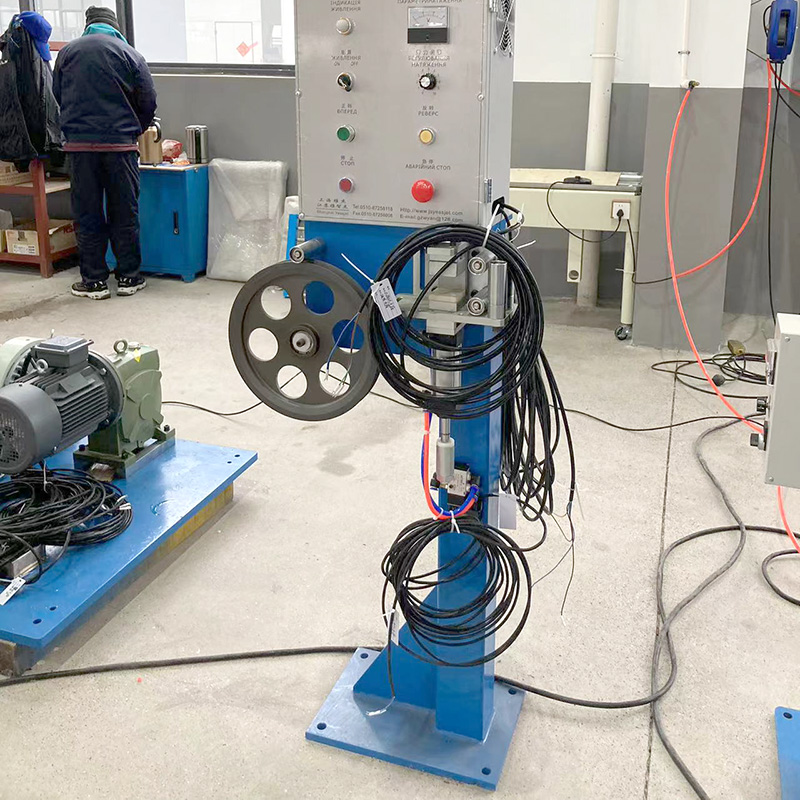
Manufacturers must choose between open-loop and closed-loop electronic systems. Open-loop systems rely heavily on diameter-based calculation algorithms. They assume consistent material thickness and predictable roller friction. These rigid assumptions often fail in real-world factory conditions. Material variations cause open-loop systems to drift continuously. They cannot detect sudden mechanical binding or roller bearing wear. Their lower initial cost tempts many budget-conscious buyers. However, they lack the necessary precision for sensitive jobs.
Automatic Tension Control using a closed-loop setup solves this drift entirely. Closed-loop mechanics utilize highly precise electronic load cells. The load cells continuously measure actual pulling tension. They send real-time analog feedback directly to the main controller. The controller adjusts drive motor torque instantly. This continuous feedback loop prevents over-stretching or slack. It adjusts for friction changes automatically.
We use a decision matrix to specify the right system. You must balance your exact daily production needs.
Decision Matrix: Open-Loop vs. Closed-Loop Control | ||
System Type | Ideal Applications | Key Limitations |
|---|---|---|
Open-Loop Control | Robust, low-speed jacketing, heavy-gauge copper wire. | Cannot detect real-time material friction changes. |
Closed-Loop Control | Highly sensitive fiber optics, high-speed multi-strand twisting. | Requires precise load cell calibration and clean environments. |
Closed-loop configurations excel in multi-strand twisting applications. You must use them for highly sensitive fiber optics. Open-loop setups remain sufficient for basic, robust tasks. You save capital on open-loop, but you sacrifice critical data. Closed-loop systems provide the ultimate quality assurance.
An Accumulator Dancer provides essential mechanical buffering. It absorbs sudden transient tension spikes effectively. These spikes occur during rapid line acceleration or aggressive deceleration. They also happen during continuous-run spool changeovers. The dancer physically stores extra cable length within its pulleys. It releases this stored length to prevent wire snapping. It gives the electronic motors crucial time to adjust speeds.
Engineers choose between pneumatic and motorized dancer setups carefully. Pneumatic dancer cylinders work well for standard wire gauges. They use regulated air pressure to maintain steady force. However, air cylinders suffer from internal seal friction. Low-friction motorized setups perform much better for delicate materials. They utilize specialized low-inertia motors to apply precise force. They respond faster and reduce internal friction drag. This ensures ultra-smooth operation for tiny optical fibers.
You must view the dancer as part of a larger network. It is not a standalone mechanical fix. It works in perfect synergy with broader Cable Handling Equipment. This broad category includes massive pay-offs, take-ups, and extruders. Integrating these nodes maintains absolute steady-state tension. The dancer bridges the mechanical gaps between fixed machines. It masks minor synchronization errors between large drive motors.
Procuring the right equipment demands careful technical evaluation. Load cell range and sensitivity dictate overall system accuracy. You must select load cells based on the lowest operating tension. Many buyers incorrectly focus only on the maximum potential load. Oversized load cells fail to detect minor tension drops. A 100-pound load cell cannot accurately measure a 2-pound force. You must size the sensor for the daily operational sweet spot.
Sampling rates determine how fast the controller reacts. Controllers require high analog or digital update rates. They must react fast enough to sudden line speed variations. Legacy systems often update too slowly to catch fast spikes. You should demand modern industrial communication protocols. Profinet and Ethernet/IP offer superior communication speeds. They synchronize data across the factory floor in milliseconds.
Environmental reliability plays a massive role in plant settings. Dust, oil, and moisture routinely compromise sensitive electronics. Load cells need strong ingress protection (IP) ratings. You must assess the necessity for temperature compensation. Metal wires experience physical thermal expansion and contraction constantly. Plant temperature shifts alter physical wire tension profiles. Robust enclosures protect the equipment from harsh realities. Reliable hardware minimizes unexpected maintenance downtime.
Upgrading extrusion lines introduces specific rollout risks. Retrofitting new tension algorithms onto legacy lines presents mechanical challenges. Older machines lack the physical mounting space for modern load cells. Engineers often custom-fabricate brackets to fit new sensors safely. You must align the pulleys perfectly to avoid side-loading. Side-loading destroys load cell accuracy instantly. New machine builds avoid these physical constraints entirely.
Calibration decay threatens the trustworthiness of tension readings over time. Sensors lose accuracy after months of heavy machine vibration. You must establish standard operating procedures (SOPs) immediately. Routine load cell calibration restores strict measurement precision. Operators must also perform regular dancer bearing maintenance. Neglecting bearing maintenance causes hidden friction and artificial tension spikes. Dirt in a bearing ruins the best electronic controls.
Operator adoption determines the ultimate success of the upgrade. Moving from operator "feel" to automated setpoints requires structured training. Veteran operators often trust their hands over digital readouts. They might initiate manual overrides during live production runs. These manual overrides defeat the system's core automated purpose. Training ensures they trust and utilize the automated feedback. You must explain the core reasoning behind the new technology.
Precise tension remains the absolute baseline for modern cable compliance. High-yield profitability depends on eliminating invisible micro-defects. Uncontrolled forces ruin otherwise perfect extrusion runs daily. You cannot inspect quality into a product after extrusion finishes. You must control the parameters during the physical manufacturing phase.
We advise buyers to audit their current manufacturing baseline immediately. You should review historic scrap logs thoroughly. Identify peak line speeds before requesting new equipment specifications. This data highlights exactly where your mechanical vulnerabilities lie. It helps you justify the capital expenditure to management.
Encourage your engineering team to consult an application expert. They will conduct a comprehensive physical line audit. They can properly size the appropriate load cells for your wire. They will also design the optimal physical dancer configurations. Actionable steps today prevent massive material waste tomorrow. Secure your production yield through intelligent tension management.
A: Temperature shifts in the plant alter the physical length of metal wires. Extreme applications like aviation cables face similar thermal variations. These changes affect the stiffness and tension profile of the material. Closed-loop systems provide active compensation to adjust for this physical expansion and contraction continuously.
A: No. Dancers provide physical accumulation and mechanical dampening. Load cells provide precise, rigid measurement of pulling forces. They are completely complementary devices. One does not replace the other in high-precision extrusion lines. Manufacturers combine both for optimal mechanical stability.
A: Industry standards suggest quarterly or bi-annual calibration. High-vibration manufacturing environments necessitate much more frequent checks. You should perform zeroing and span checks monthly if the machinery runs continuously. Regular calibration ensures the load cells maintain their strict measurement accuracy over time.