Introduction
In motor manufacturing, selecting the right coil wrapping machine is essential. The armature coil winding process directly affects motor efficiency, production speed, and cost. With many options available, it’s important to evaluate machines based on your unique needs. In this article, we will discuss key factors to consider when choosing the right coil wrapping machine for your business.
What to Consider Before Choosing an Armature Coil Winding Machine
Defining Your Production Requirements
Before selecting a coil wrapping machine, understanding your production needs is critical. Consider factors such as the volume of coils needed, the type of motors you are manufacturing (e.g., automotive motors, power tool motors, household appliance motors), and the specific application (e.g., electric vehicles, home appliances). These requirements directly influence the type of machine you should choose. For instance, low-volume production might benefit from a semi-automatic model, while high-volume operations will likely need a fully automatic system.
Understanding Coil Specifications
The wire diameter and coil size are essential factors when choosing a coil wrapping machine. Different coil sizes and wire diameters require different machine configurations. Also, consider the type of slot configuration (inward vs. outward-facing) and the winding pattern (lap winding, wave winding). If your coils have specific design needs, the coil wrapping machine must accommodate these features to ensure accurate and efficient winding.
Evaluating Winding Precision and Quality
Precision is vital in the armature winding process. Inconsistent winding can lead to poor motor performance, defects, and rework. Look for a coil wrapping machine that provides tight control over tension, spindle design, and winding speed. Machines with programmable features allow for adjustments to match winding precision, reducing the risk of errors and ensuring high-quality output.
Types of Armature Coil Winding Machines
Manual Armature Winding Machines
Manual armature winding machines are ideal for low-volume production or repair work. These machines require significant operator involvement and are more labor-intensive than automated systems. While they are affordable, they offer less precision and consistency compared to semi-automatic or fully automatic machines. However, for small batches or prototyping, manual machines can provide the flexibility needed for custom designs.
Semi-Automatic Armature Winding Machines
Semi-automatic machines strike a balance between manual and fully automatic systems. They are suitable for medium-volume production, offering features like adjustable tension control and wire feeding assistance. While they still require some manual input, they can improve efficiency and reduce errors, making them ideal for businesses that need a blend of automation and affordability.
Fully Automatic Armature Winding Machines
Fully automatic armature winding machines are designed for high-speed, high-volume production. They offer automation for wire feeding, tension control, and even commutator hooking. These machines significantly reduce labor costs while ensuring consistent quality. The integration of CNC controls allows for precise winding, making them suitable for industries that require high precision and large quantities.
CNC-Controlled Armature Winding Machines
CNC-controlled armature winding machines provide extreme accuracy and are ideal for specialized motor applications, such as those in aerospace or automotive industries. These machines offer programmable winding patterns, advanced tension control, and multi-axis movement, enabling them to handle complex coil designs and provide high-quality, consistent results for demanding applications.
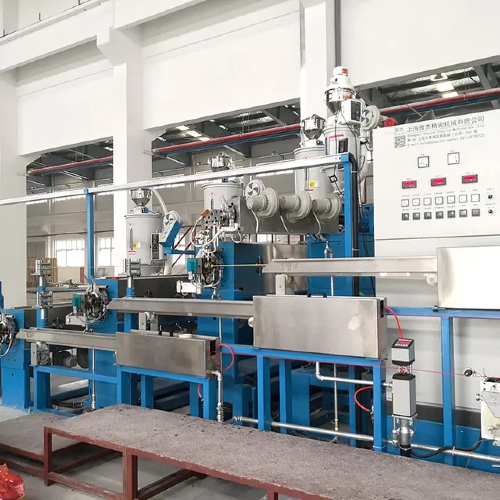
Key Features to Look for in a Coil Winding Machine
Tension Control and Wire Feeding Systems
The ability to control wire tension is crucial for consistent, high-quality winding. Machines with adjustable tension systems ensure that the wire is wound tightly without breaking. Coil wrapping machines with automatic wire feeding reduce the chance of operator error and maintain consistent tension, especially when handling varying wire diameters and coil sizes.
Speed and Precision Capabilities
The speed of a coil wrapping machine is closely linked to its accuracy. While high-speed winding is essential for large production volumes, it should not compromise coil precision. Machines with adjustable RPM and programmable settings allow for optimal winding speed without sacrificing quality, making them ideal for high-demand environments.
Programmable Control Systems (PLC/HMI)
Modern coil wrapping machines often feature PLC or HMI control systems, which provide easy-to-use interfaces for operators. These systems allow for fast program changes, recipe storage, and real-time diagnostics. Programmable machines reduce setup times and ensure consistency across different coil designs, which is particularly valuable when dealing with complex winding specifications.
Price vs. Value: Is a Fully Automatic Machine Worth the Investment?
Evaluating the Cost of Fully Automatic vs. Semi-Automatic Machines
The following table compares the key differences between fully automatic and semi-automatic coil wrapping machines in terms of cost, efficiency, and technical features, providing a clear guide for businesses to make an informed decision.
| Feature | Fully Automatic Coil Wrapping Machine | Semi-Automatic Coil Wrapping Machine |
| Initial Cost | High | Low |
| Labor Costs | Low (Automation reduces labor requirements) | High (More manual labor required) |
| Production Speed | Fast (Efficient automation for high-volume production) | Slow (More manual intervention, lower speed) |
| Operational Complexity | Low (Simplified operation through PLC or HMI interface) | Medium (Requires manual adjustments and control) |
| Technical Requirements | High (Requires programming and setup, advanced automation features) | Low (Simpler system for medium-scale production) |
| Material Waste | Low (Precise wire tension control reduces waste) | High (Manual adjustments lead to more waste) |
| Maintenance Needs | Low (Reduced maintenance frequency due to automation) | High (Frequent manual maintenance required) |
| Suitable Production Scale | High-volume (Best for large-scale, continuous production) | Medium-volume (Ideal for small batches or R&D) |
| Future Adaptability | High (Easily scalable and adaptable to different coil sizes and requirements) | Low (Limited capacity for scaling or changes) |
Tip: When choosing a fully automatic coil wrapping machine, consider your long-term production needs and potential cost savings, ensuring it can accommodate future business growth.
Maintenance and Long-Term Durability
When evaluating a coil wrapping machine, consider its long-term durability and ease of maintenance. Machines with modular designs and easily replaceable parts will save on repair costs. Additionally, having access to reliable after-sales support ensures that maintenance issues can be resolved quickly, minimizing downtime and maintaining productivity.
Flexibility for Future Growth
Choose a coil wrapping machine that can adapt to changing production needs. Machines with modular components or the ability to handle different wire sizes and coil dimensions will future-proof your investment. This flexibility is crucial as your business scales or shifts to producing different types of coils.
After-Sales Support and Training
Importance of Reliable Customer Service
Choosing a supplier that offers strong after-sales support is essential for the long-term success of your coil wrapping machine. Ensure that the manufacturer provides installation assistance, technical support, and training. Proper training for operators ensures they can utilize the machine efficiently, reducing errors and improving productivity.
Troubleshooting and Upgrades
Choose a coil wrapping machine with software upgrades and remote diagnostics. These features help detect issues early, reduce downtime, and maintain peak performance, ensuring long-term efficiency and minimal disruptions.
| Feature | Fully Automatic Coil Wrapping Machine | Semi-Automatic Coil Wrapping Machine |
| Software Upgrades | Available (Enables system improvements and bug fixes) | Not always available (Basic features only) |
| Remote Diagnostics | Available (Allows quick issue identification and resolution) | Limited (Onsite support required for troubleshooting) |
| Downtime Reduction | Significant (Remote troubleshooting reduces interruptions) | Moderate (Manual troubleshooting may cause longer delays) |
| Maintenance Frequency | Low (Regular updates and diagnostics reduce maintenance needs) | High (Frequent manual adjustments needed) |
| Machine Performance | Maintained at peak (Continuous monitoring ensures optimal performance) | Variable (Performance may degrade without proper support) |
Tip: Choose machines with remote diagnostics and software upgrades to reduce downtime and keep your operations running smoothly with less manual effort.

Common Pitfalls in Choosing an Armature Coil Winding Machine
Overlooking Future Needs
When selecting a coil wrapping machine, consider the long-term growth of your business. Machines that support a range of wire sizes and adaptable coil dimensions ensure scalability. Investing in flexible machines from the start prevents costly future upgrades. Look for models with modular components or programmable features, allowing easy upgrades to handle new production requirements.
Underestimating Maintenance and Support Requirements
Ignoring maintenance needs can result in costly downtime. Machines with easy access to parts and clear maintenance schedules help prevent breakdowns. Opt for machines with remote diagnostics to streamline troubleshooting. Ensure the manufacturer offers comprehensive support, including training, spare parts, and quick response times, to avoid unnecessary delays.
Failing to Request a Demonstration
Requesting a demonstration or trial run is essential to assess a machine’s fit for your production needs. It allows you to test key features such as wire tension control, speed, and precision under real conditions. This hands-on evaluation can identify potential issues, ensuring that the machine meets your specifications before purchase, ultimately reducing risks.
Conclusion
Choosing the right coil wrapping machine is crucial for the efficiency and quality of your production line. Consider factors like production volume, coil specifications, and machine precision to align with your business needs. Prioritize flexibility, future growth, and reliable after-sales support. Jiangsu Yassjet Precise Machinery Co., Ltd. offers high-quality machines designed for both small and large-scale operations, ensuring efficiency and adaptability to future production demands. Their products bring value by enhancing production speed, reducing costs, and ensuring consistent quality.
FAQ
Q: What is a coil wrapping machine?
A: A coil wrapping machine is a specialized tool used to wind wire around a core, typically used in manufacturing motors, transformers, and other electromagnetic components. It ensures precise and uniform winding to meet the technical specifications of the coils.
Q: How do I choose the right coil wrapping machine for my production needs?
A: When choosing a coil wrapping machine, consider factors such as production volume, coil size, wire diameter, and required precision. For high-volume production, a fully automatic machine is ideal, while semi-automatic machines are better for medium-scale operations.
Q: What are the advantages of a fully automatic coil wrapping machine?
A: Fully automatic coil wrapping machines offer high efficiency, reduced labor costs, and consistent quality. They also minimize human error and can handle larger volumes with higher precision, making them ideal for large-scale manufacturing.
Q: Why is tension control important in a coil wrapping machine?
A: Tension control is crucial to prevent wire breakage and ensure uniform winding. It helps maintain consistent tension throughout the winding process, leading to better coil quality and reducing material waste.
Q: How do I maintain a coil wrapping machine?
A: Regular maintenance includes cleaning wire guides, lubricating moving parts, and calibrating tension sensors. It's essential to follow the manufacturer's maintenance guidelines to keep the machine running smoothly and avoid costly repairs.