

close
Choose Your Site
Global
Social Media

Views: 0 Author: Site Editor Publish Time: 2025-12-03 Origin: Site


Choosing the best cable extruder machine for your production needs is a critical decision that impacts both the quality of your cables and the efficiency of your manufacturing process. Whether you are producing power cables, communication cables, or specialty wires, selecting the right extruder machine ensures the consistent quality and performance of the final product. This guide will help you understand the key factors to consider when choosing a cable extruder machine, and how to make an informed decision based on your specific requirements.
When selecting the ideal cable extruder machine for your production line, several factors must be evaluated to ensure the machine meets your operational needs. These factors range from the type of cables you are producing to the material compatibility and production speed.
The first step in selecting a cable extruder machine is understanding the type of cables you will be manufacturing. Different cables have different production requirements, and the machine you choose must be capable of meeting those specifications.
For power cables, which require robust insulation and protective coatings, you will need a machine that can handle thicker insulation layers and higher extrusion pressures.
Communication cables, such as fiber optic and coaxial cables, typically require precision in terms of insulation thickness and the use of specialized materials like polyethylene or rubber. For these cables, extruders with higher precision and better control over temperature and speed are essential.
Specialty cables, which include medical, automotive, and industrial cables, may require multi-layer extrusions or specific coatings for protection against heat, chemicals, or other environmental factors.
Cable extruder machines are designed to process a wide variety of materials, and the materials used in cable production play a significant role in machine selection. Common materials used for insulation and coating include:
Material | Properties | Common Applications |
PVC | Cost-effective, flame retardant, easy to mold | Power cables, general-purpose cables |
PE | Excellent dielectric properties, low-cost | Low-voltage power cables, data cables |
Rubber | High flexibility, resistant to wear and tear | Flexible cables, heavy-duty cables |
XLPE | Cross-linked polyethylene, high thermal resistance | Power cables for harsh environments |
The cable extruder machine you select must be compatible with the materials you intend to use. For instance, extruders for PVC require different heating and cooling systems compared to those needed for rubber or thermoplastic materials like PE or XLPE.
The production capacity of your cable extruder machine determines how much material you can process over a set period. Depending on your production goals, you will need to select a machine that can meet your throughput requirements.
High-Volume Production: If your factory is focused on mass production of cables, you need a high-speed, high-capacity machine capable of processing large volumes of material quickly without sacrificing quality.
Low-Volume or Custom Production: For low-volume or custom cable production, you may not require as high a speed. In this case, flexibility and the ability to produce varied cable types are more important than sheer throughput.
Precision is critical in cable extrusion, especially when producing cables that need to meet strict regulatory standards. The ability to control variables like temperature, screw speed, and pressure ensures that each cable is produced to exact specifications.
Look for machines that offer:
Temperature Control: Adjustable heating systems that ensure the material is heated to the correct temperature for optimal flow and consistency.
Screw Speed Control: The ability to adjust screw speed is essential for controlling the extrusion rate and ensuring a consistent output.
Pressure Control: A well-controlled pressure system ensures that the material flows smoothly through the die without causing defects or inconsistent insulation thickness.
Choosing the right cable extruder machine involves evaluating its features to ensure it meets your production needs. Below are the key features to look for when selecting a cable extruder machine.
The screw design in the cable extruder machine plays a crucial role in the material mixing, feeding, and melting process. There are two primary screw configurations:
Single Screw Extruders: Single screw extruders are simpler and more cost-effective. They work well for basic insulation materials that do not require complex mixing or blending.
Twin Screw Extruders: Twin screw extruders offer better mixing and are ideal for processing more complex materials or materials that require higher precision. They can process a wider variety of materials, which makes them ideal for manufacturers producing a range of cable types.
Energy efficiency is an important consideration when choosing a cable extruder machine. With rising energy costs, energy-efficient machines can help reduce operational expenses in the long run.
Modern extruders are designed with energy-saving features such as:
Optimized Heating Systems: High-efficiency heaters that reduce energy consumption.
Variable Speed Drives: These allow the machine to adjust power usage based on the specific production requirements, reducing energy waste during non-peak production periods.
The cooling system is an essential part of the extrusion process. It ensures that the extruded material solidifies properly and that the final cable maintains its shape and consistency.
Cooling systems come in different configurations:
Water-Cooled Systems: These are commonly used for thick insulation materials and provide rapid cooling.
Air-Cooled Systems: These are suitable for smaller diameter cables and materials that cool more easily.
Hybrid Systems: A combination of water and air cooling systems may be used for greater flexibility.
Automation plays a significant role in improving the efficiency and accuracy of the cable extruder machine. Machines equipped with automated control systems can adjust extrusion parameters such as temperature, screw speed, and pressure in real-time, ensuring better consistency and reducing the risk of defects.
The durability of the cable extruder machine is important for long-term performance. Machines made from high-quality, corrosion-resistant materials will require fewer repairs and have a longer lifespan.
Additionally, consider the ease of maintenance. Machines that are easy to maintain, with accessible components for regular inspection and replacement, will reduce downtime and improve overall operational efficiency.
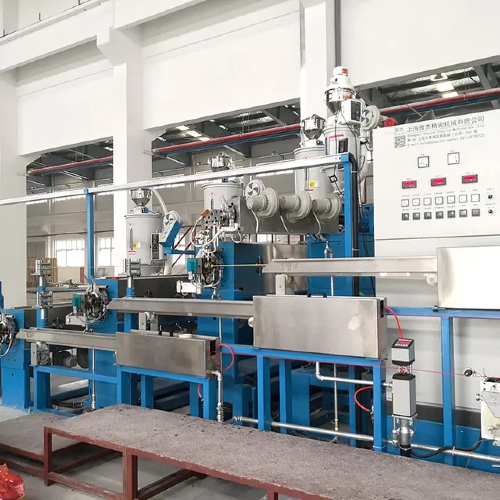
When selecting a cable extruder machine, you will need to decide whether to choose a single screw or a twin screw extruder. Both types have their advantages and limitations, and the right choice depends on your specific production needs.
Single screw extruders are widely used and are generally more cost-effective. They work well for producing basic cables that do not require complex formulations.
Simpler design, making them easier to operate and maintain.
Cost-effective for basic cable production.
Suitable for single-material extrusion processes.
Limited in terms of mixing capabilities and material versatility.
Less suitable for high-speed or high-precision applications.
Twin screw extruders are more advanced and offer superior mixing capabilities. They are ideal for manufacturers who need to process more complex materials or produce a wide variety of cables.
Superior mixing efficiency, allowing for better blending of different materials.
Suitable for high-speed production.
More flexible in terms of the types of materials and coatings that can be processed.
Higher cost compared to single screw extruders.
More complex maintenance and operational requirements.
Customization options are an important consideration when choosing a cable extruder machine, especially if you are producing specialized cables with unique specifications. Modern machines often come with customizable features that allow manufacturers to adjust various parameters based on their specific needs.
For example:
Multi-Layer Extrusion: Machines can be customized to apply multiple layers of insulation, shielding, or jacketing.
Diameter and Thickness Control: Adjusting the diameter or thickness of the insulation is crucial for different cable types, and some machines offer this flexibility.
While the initial cost of a cable extruder machine is an important consideration, it’s also crucial to evaluate the machine’s total cost of ownership. A higher initial cost may be justified by better performance, greater energy efficiency, and lower maintenance costs.
Here’s what to consider:
Initial Investment: Ensure that the cost aligns with your budget while factoring in any additional customization or features.
Energy Consumption: Choose energy-efficient models to lower operational costs over time.
Maintenance: Factor in the cost of regular maintenance and potential repairs to determine the total cost over the machine's lifespan.
Choosing the right cable extruder machine is essential for ensuring the production of high-quality cables. By thoroughly understanding your specific production needs, assessing machine features, and balancing initial cost with long-term value, you can select a machine that will boost efficiency, minimize operational costs, and help you achieve your production objectives. Whether you need a basic single screw extruder for standard cables or a more advanced twin screw extruder for complex materials, the right equipment is pivotal for the success of your manufacturing process.
At Jiangsu Yassjet Precise Machinery Co., Ltd., we offer a range of high-quality, customizable cable extruder machines designed to meet diverse production requirements. Our machines are engineered for precision, durability, and energy efficiency, ensuring optimal performance in various cable manufacturing applications. By partnering with us, you gain access to advanced technologies and expert support to streamline your production line. Contact us today to learn more about how our cable extruder machines can enhance your manufacturing capabilities and help you stay competitive in the market.
1. What factors should I consider when choosing a cable extruder machine?
You should consider the type of cables you plan to produce, material compatibility, production capacity, and the required precision and control for your cable specifications.
2. What is the difference between a single screw and a twin screw extruder?
A single screw extruder is simpler, cost-effective, and suitable for basic materials, while a twin screw extruder offers better mixing, higher efficiency, and is ideal for complex materials and high-speed production.
3. How does the choice of material affect the extruder machine selection?
Different materials, such as PVC, PE, and rubber, require different processing techniques. The cable extruder machine should be compatible with the material you are using in terms of heating, cooling, and screw design.
4. How does automation improve the cable extrusion process?
Automation ensures better control over the extrusion parameters, such as temperature and screw speed, leading to consistent product quality, reduced errors, and faster production times.
5. Is it worth investing in a high-quality cable extruder machine?
Yes, investing in a high-quality machine will lead to better precision, reduced energy consumption, lower maintenance costs, and improved cable quality, ultimately providing a higher return on investment.